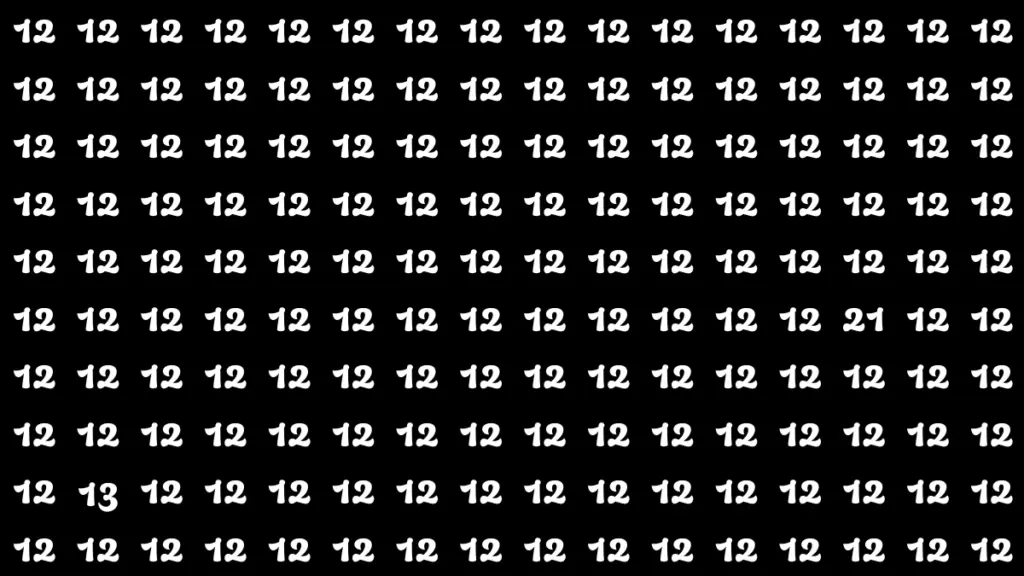
Have you ever looked at a wall of numbers and felt your eyes blur after a few seconds? This 7-second optical illusion challenge is meant to do just that. At first glance, all the numbers look the same. A neat grid with the number 12 repeated over and over. But there are two intruders in that sea of sameness. The numbers 21 and 13 are hidden away waiting to be found.
The real question is easy. Can you find both in just seven seconds?
This puzzle might seem simple. No, it isn’t. Patterns are something your brain loves. It calms down when it sees the same thing over and over. It stops checking carefully because it thinks everything is the same. That’s what makes this illusion so hard to see.
 5 Yoga Moves to Loosen Tight Hips After Sitting All Day and Restore Comfortable Natural Movement
Why This Optical Illusion Is More Difficult Than It Seems
Your brain quickly picks up on the pattern when you see a number like 12 over and over again. It doesn’t read each number one at a time; instead, it processes them in groups. That saves energy, but it also makes mistakes more likely.
The only thing that separates 12 and 21 is a switch. There is only one digit that changes between 12 and 13. If you scan quickly you might not notice those small changes.
Your brain automatically fills in the gaps when your eyes move quickly. It thinks it knows what it will see. That’s why you might not see it even if you look right at 21.
The Rule of Seven Seconds
Setting a timer for seven seconds makes you feel more pressure. When you have a deadline you get more focused, but your accuracy may go down. Your brain goes from careful analysis mode to quick-scan mode.
This challenge isn’t just about your eyes. It’s about being able to control your attention. Can you stop your brain from thinking that everything is 12?
Give this method a shot. Instead of reading the numbers from left to right, read them from top to bottom. Or just pay attention to the second digit in each pair. Changing the way you look at something can sometimes make the hidden numbers stand out right away.
What This Puzzle Tells You About Your Brain
This kind of optical illusion tests your ability to pay attention to only one thing at a time. That means you can pay attention to certain details and not let other things get in the way. Repetition is what is distracting in this case.
If you can quickly find both 21 and 13, it could mean you have good visual discrimination skills. That means you can see small differences even when everything else looks the same.
It is perfectly normal for it to take longer Most people have a hard time with number-based illusions because the differences are small and easy to miss.
These puzzles also show what is known as pattern blindness. The brain stops questioning things when it expects them to be the same. That works well in everyday life but not in puzzles like this one.
Ways to Get Better at Observing
If you like these challenges and want to get better, here are some useful tips:
- Instead of looking at the whole number, look at one digit at a time.
- Split the grid into smaller parts.
- Don’t rush; take your time breathing.
- Let your eyes move in a zigzag pattern.
Your brain gets better at finding small mistakes over time. It is like working out a muscle. The more you practise the better you get at noticing things.

The Big Surprise
Don’t worry if you couldn’t find them in seven seconds. Look again closely. One of the numbers in the grid says 21 instead of 12. Another one says 13.
They seem obvious as soon as you see them. That’s the funny thing about illusions. Once your brain changes its mind about what it expects, the hidden detail is impossible to miss.
And that’s what makes these puzzles so hard to put down. They make us question the difference between what we think we see and what is really there.
Questions and Answers
What is a challenge for optical illusions?
A visual puzzle called an optical illusion challenge tries to trick your brain into seeing things in a different way. It often includes things that are hidden, numbers that have been changed, or small differences.
Why are number illusions so hard?
It’s hard to see number illusions because the differences are usually very small. Your brain quickly picks up on patterns and assumes that things will happen again which makes it harder to see small changes.
Do these puzzles help your brain work better?
Optical illusion puzzles won’t magically make your brain work better, but if you do them often they can help you pay more attention to details, concentrate better, and scan your surroundings better.
What should I do if I can’t find the numbers that are hidden?
Take a short break and come back with a new perspective. You can see the difference by changing the direction of your scan or focusing on one digit at a time.
Are optical illusion puzzles good for kids?
Yes, they can help kids get better at paying attention and seeing things in a fun and interesting way. They also teach you to be patient and pay close attention.