
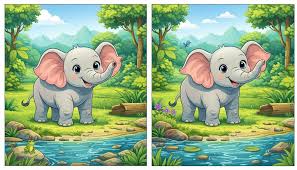
Observation games have become a favorite online activity for people who enjoy quick brain challenges, especially in countries like the United States where puzzle content attracts millions of readers daily. One of the most engaging formats is the “spot the difference” challenge, where two nearly identical pictures hide subtle changes. In this observation game featuring elephant pictures, the goal is to carefully compare the images and identify hidden differences. These puzzles are not just entertaining—they also help improve concentration, strengthen memory, and sharpen visual perception, making them a fun way to train the brain.
Observation Game With Elephant Images to Test Visual Attention
An observation game built around elephant pictures offers a playful yet challenging way to test how attentive your eyes really are. At first glance, both images may look exactly the same, but small visual details are carefully altered. Players must rely on keen visual attention to detect these subtle variations. These puzzles encourage the brain to slow down and notice patterns that often go unnoticed. By focusing on small picture details, players gradually improve their ability to identify hidden changes. Many puzzle fans love this format because it delivers quick mental stimulation while sharpening focus and awareness, turning a simple puzzle into an engaging mental workout.
Spot Hidden Differences in Elephant Pictures Step by Step
Solving a spot-the-difference puzzle becomes easier when you approach it with a method. Instead of randomly searching the image, begin from the top corner and move across the picture slowly. This technique helps develop systematic image scanning and improves pattern detection ability. Players often discover that small elements—like ears, shadows, or background shapes—hold the hidden differences. Practicing these puzzles regularly strengthens visual comparison skills and encourages careful observation. With patience and practice, the brain becomes faster at identifying changes, making each puzzle a rewarding test of attention to detail.

Why Elephant Observation Games Improve Visual Skills
Observation games are more than simple entertainment—they are powerful tools for improving mental sharpness. When players compare two elephant images to locate differences, the brain actively processes shapes, patterns, and colors. This process supports visual processing speed and enhances memory recognition patterns. Over time, players notice improvements in their ability to focus and analyze visual information. These puzzles also promote cognitive attention training, helping the mind stay alert during complex tasks. For students, professionals, and puzzle enthusiasts, elephant observation games provide a relaxing activity that still delivers meaningful brain skill enhancement.
Final Thoughts on Elephant Spot-the-Difference Puzzles
Elephant-themed observation puzzles continue to attract puzzle lovers because they combine simplicity with a rewarding challenge. Anyone can start playing instantly, yet the hidden details demand patience and sharp focus. These games encourage daily mental exercise, improve visual concentration levels, and build stronger analytical observation habits. The satisfaction of finding every difference also motivates players to keep improving their skills. Whether you play alone or challenge friends, these puzzles offer an enjoyable way to sharpen perception while experiencing the excitement of a fun brain challenge.
| Puzzle Element | Details |
|---|---|
| Game Type | Spot the Difference |
| Theme | Elephant Pictures |
| Skill Tested | Visual Attention |
| Difficulty Level | Beginner to Moderate |
| Recommended Age | 10 Years and Above |
Frequently Asked Questions (FAQs)
1. What is a spot-the-difference observation game?
It is a puzzle where players compare two similar images to identify hidden visual changes.
 Simple Brow Lamination Techniques at Home Help Achieve Fuller Thicker Eyebrows Without Salon Visits
2. How do observation puzzles improve attention skills?
They train the brain to focus carefully on small details and patterns.
3. How many differences are usually hidden in these puzzles?
Most puzzles include between five and ten subtle differences.
4. Are elephant observation games suitable for children?
Yes, they are simple, fun, and helpful for improving children’s visual skills.